October 14, 2026
Roofing Website Design Essentials for More Calls, Quote Requests, and Trust
By @contractorreview061
A roofing company’s website has a short window to do its job. Most visitors are not browsing for fun. They are dealing with a leak, storm damage, an aging roof, or a tight timeline before listing a home for sale. They want to know three things fast: do you serve their area, can you handle their problem, and how do they reach you right now.
That reality shapes good roofing website design more than trends, animations, or clever copy ever will. A strong site for a roofer should help a homeowner take action with very little friction. Google’s own guidance backs that up. Key information should be visible quickly, navigation should stay simple, mobile pages should load fast, and sites should make it easy for people to contact the business. For a trade business, that is not just good usability. It is the difference between a lead and a bounce.
The same principles apply across contractor website design, whether you are building for roofing, HVAC website design, plumbing website design, or electrician website design. Still, roofers have a few pressure points that deserve special attention. Roofing work is highly local, strongly trust-driven, and often urgent. Your website has to reflect that from the first screen.
Your homepage should answer the visitor’s first question immediately
The biggest mistake I see in website design for contractors is trying to sound impressive before being useful. A roofer’s homepage does not need a vague headline about craftsmanship and excellence floating over a stock photo of a smiling couple. It needs to tell people what you do, where you do it, and what to do next.
If you serve a service area rather than a storefront location, your website should make that clear in plain language. Google Business Profile allows service-area businesses to define where they work, choose the right category, and show their website on the profile. That matters because local prospects often bounce between your profile and your site. If your service area feels vague or inconsistent, trust drops.
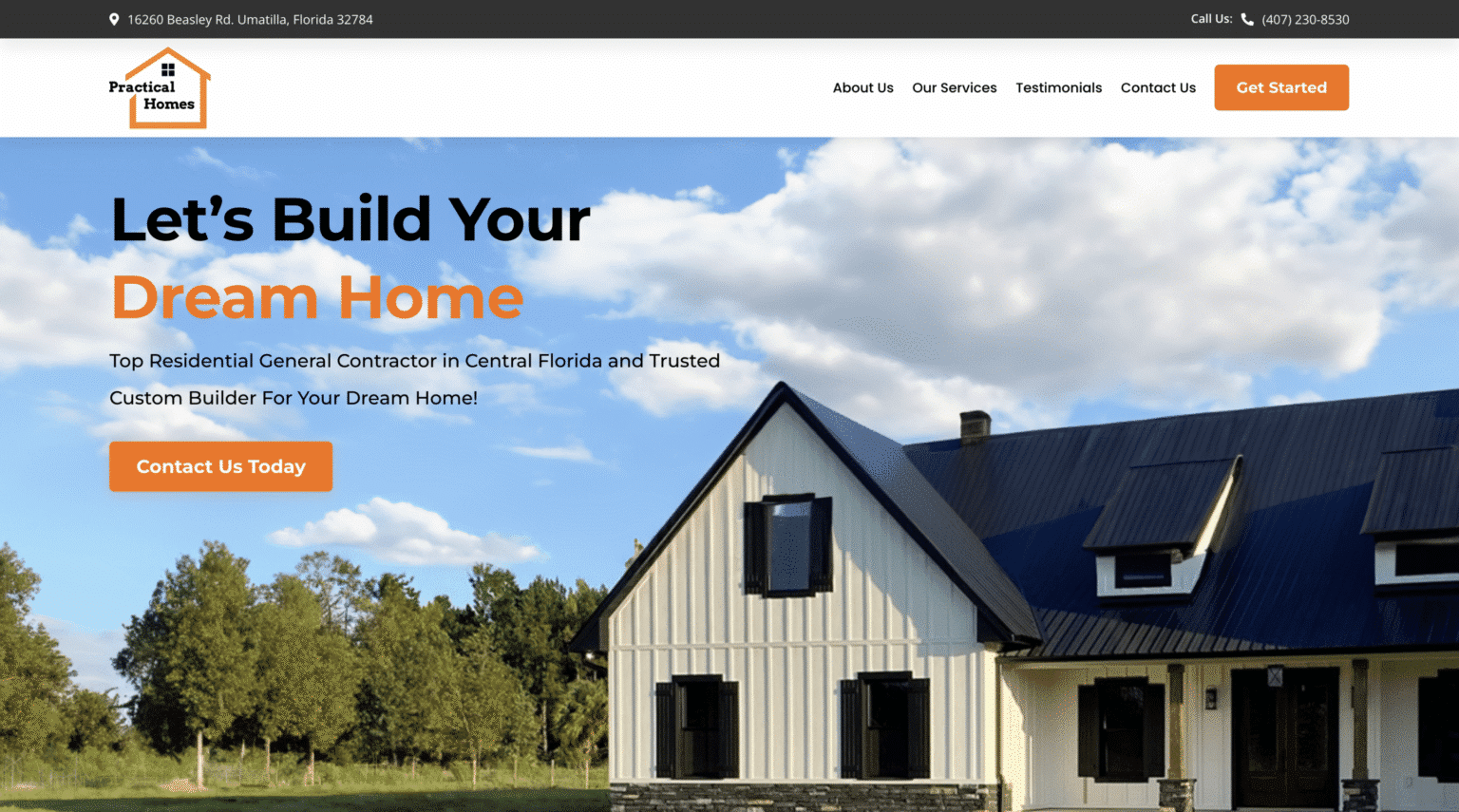
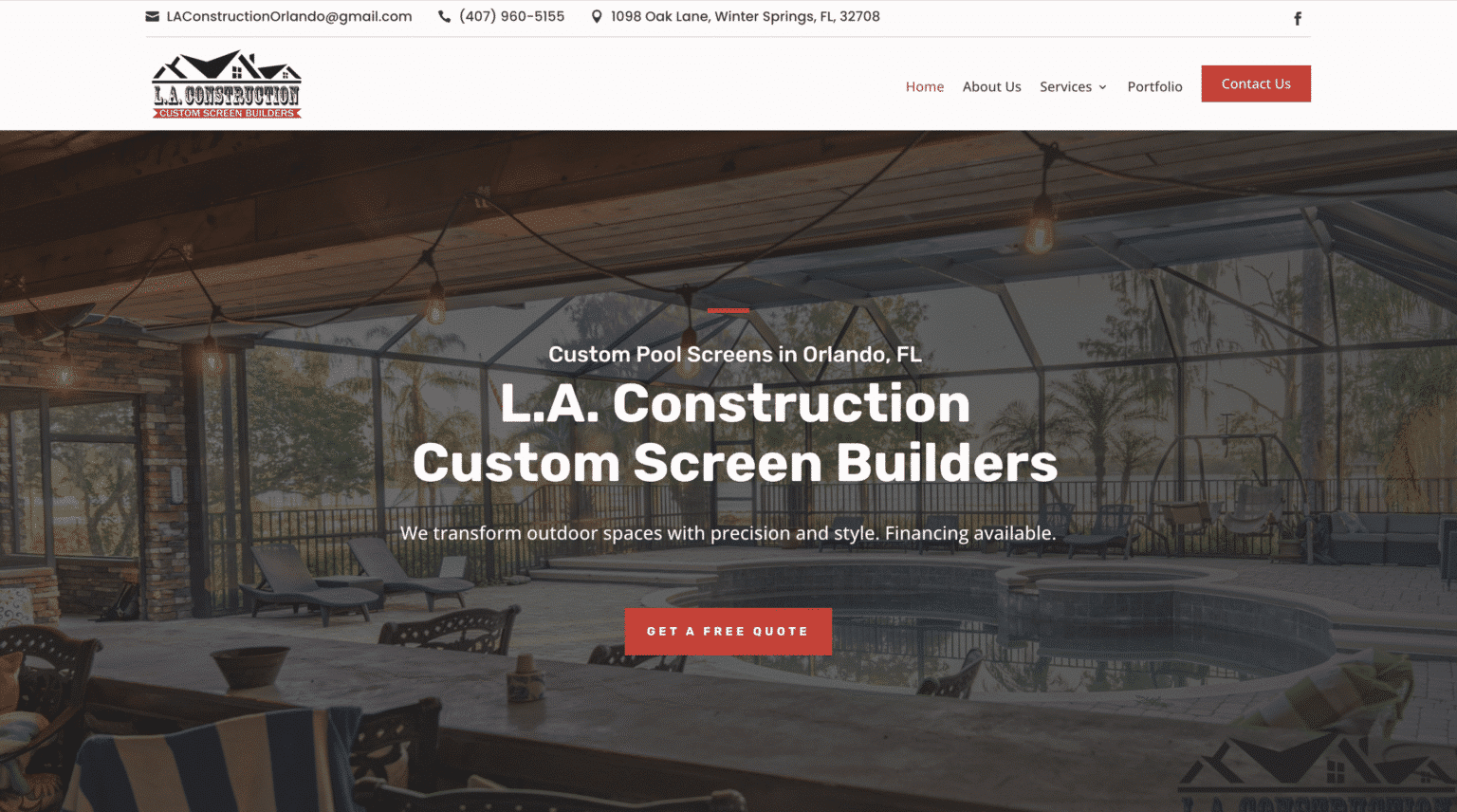
A strong hero section usually includes the service, the area, and an obvious contact path. “Residential and commercial roofing in Houston” is more useful than “trusted exterior solutions.” A click-to-call button matters because many visitors are on phones. Google specifically emphasizes mobile-friendly experiences, and that includes making calls and other actions as easy as possible.
That first screen also needs restraint. If a pop-up blocks the page before a visitor can even confirm they are in the right place, it creates friction right where you can least afford it. Google advises avoiding heavy pop-ups, and that advice lands especially well in home service website design. When someone needs a roofer, extra obstacles feel expensive.
Mobile experience is not a feature, it is the main event
A roofing site should be designed for thumbs first. Not because desktop no longer exists, but because many local searches happen on phones, and Google has been clear that mobile-friendly pages matter. Mobile-first indexing also means hard-to-crawl, slow, or inconsistent mobile pages can hurt visibility.
That sounds technical, but the visitor experiences it in simple terms. If the page drags, they leave. If the phone number is tiny, they get annoyed. If the quote form takes too many steps, they put it off and call the next company.
For roofing website design, mobile priorities are practical. The call button should be obvious without scrolling. The contact form should be short enough that someone can finish it from a driveway or jobsite. Navigation should not bury services behind fancy menu effects. Roof repair, roof replacement, storm damage, commercial roofing, and financing information, if applicable, should be easy to find.
There is a particular kind of friction that hurts roofing leads: asking for too much too soon. Google’s mobile guidance supports keeping forms and actions to as few steps as possible. That does not mean collecting no information. It means collecting enough to start the conversation. Name, contact method, address or ZIP code, and a short description of the issue often does more work than a long intake questionnaire.
Trust is built with specifics, not adjectives
Roofing is a high-trust purchase. People are inviting a contractor to work on one of the most important parts of their home, often after a stressful event. Generic promises do not carry much weight. Specifics do.
Real project photos are one of the strongest trust signals available to roofers. Google encourages photos in Local Services Ads and reviews them for quality before publishing. That lines up with what works on roofing sites too. Authentic the Scalable Websites team photos of completed jobs, crews, materials, and before-and-after results communicate far more than stock imagery. They show that the company does actual work in actual neighborhoods.
Reviews matter for the same reason. Google Business Profile includes reviews, and Google encourages businesses to read and reply to them. Featuring selected reviews on the website can reinforce the same trust signals people already see in local search. It also helps visitors who land directly on the site instead of your profile.
The key is presentation. Do not dump a wall of testimonials on the homepage and call it done. Place trust where people need reassurance most. Put review snippets near quote forms. Add project images on service pages. Use captions that tell visitors what they are seeing. A roof replacement photo means more when the visitor can tell whether it was asphalt shingle, metal, residential, or commercial work.
The best roofing sites remove small points of hesitation
A website does not have to answer every possible question. It does need to prevent the common reasons people hesitate to contact you.
Some of those reasons are simple. They do not know if you work in their town. They are unsure whether you handle their specific issue. They are not ready to call but would send a message. They are browsing after hours and assume no one is available.
Google’s guidance around Local Services Ads offers a useful lens here. It emphasizes services offered, service area, hours, reviews, and messaging or booking, particularly because those tools can increase the likelihood of receiving leads when the phone is not answered. Even if a roofing company is not leaning on every Google product, the principle carries over perfectly to the website.
That means your site should clearly show service areas, business hours, and a path for after-hours contact. Messaging or chat can help, especially on mobile, where typing a short question feels easier than placing a call. Google’s communication tools also highlight messaging as a mobile-friendly way for customers to start conversations. For roofers, that is valuable during evenings, weekends, and storm events, when people may be researching before they are ready to talk live.
Service pages should sound local and useful
Many websites for contractors make the mistake of creating one “services” page and stuffing every offering into it. That usually leaves the copy too thin to be useful and too broad to perform well in local search.
A better approach is to give major services room to breathe. Roof repair and full roof replacement are not the same customer journey. Commercial roofing often involves different expectations from residential work. Storm damage inquiries usually arrive with urgency and uncertainty. A visitor looking for one of those services should land on a page that feels like it was written for that exact need.

That does not mean loading the page with every keyword variation you can think of. It means being precise. Roofing website design works best when each page has a clear purpose, a clear service, and a clear local fit. The same logic applies to local SEO for contractors more broadly. Search visibility improves when your site is crawlable, mobile-consistent, and aligned with what your business actually offers in the areas you actually serve.
If your Google Business Profile says you serve certain locations, your site should reinforce that with matching service area language. If your business category and services are specific, your pages should be specific too. Consistency matters because prospects notice mismatches just as quickly as search engines do.
Navigation should feel boring in the best possible way
Roofing companies do not need clever site architecture. They need clarity. A homeowner should not have to decode your menu. This is one place where boring is a compliment.
A simple navigation usually outperforms a complicated one because it lowers cognitive load. If the top menu includes core services, service areas, reviews or gallery, about, and contact, most users can orient themselves right away. That matters on desktop and even more on mobile, where hidden menus already add a layer of friction.
Here is a useful gut check for contractor website design. If a first-time visitor can reach your phone number, quote form, service area information, and proof of real work within seconds, the structure is probably doing its job. If they have to bounce between pages to answer basic questions, the site is making the sale harder.
What should appear above the fold
The most important content should not hide below a giant image or slider. Google’s recommendation to keep key information above the fold is practical advice for roofers, because homeowners often decide within moments whether they trust the page enough to continue.
Above the fold, most roofing sites benefit from a few essentials:
- a clear statement of roofing services and service area
- a visible phone number or click-to-call button
- a primary quote request or contact action
- a trust cue such as reviews, real photos, or years in business if you choose to mention it and can support it
- clean navigation that does not require hunting
That is not about cramming the screen with elements. It is about removing ambiguity. When a visitor can immediately confirm what you do and how to reach you, the page has done the first piece of its job.
Lead generation depends on reducing friction, not just adding forms
A lot of lead generation websites for contractors confuse activity with performance. They add more buttons, more pop-ups, more widgets, and more steps, thinking that more capture points means more leads. Often it means more noise.
Google’s guidance points in a simpler direction. Fast pages, minimal steps, and clear contact options create better conditions for action. On a roofing site, that usually means one strong primary action and a couple of secondary paths. Call now is primary for urgent needs. A short quote form serves the visitor who is comparing options. Messaging can catch after-hours or low-pressure inquiries.
The important part is not the number of options. It is how easy they are to use. If the form asks for ten fields, file uploads, and detailed property information on the first touch, some visitors will stall. If chat opens instantly, covers the page, and refuses to go away, others will leave out of annoyance. Every contact tool should make the next step easier, not heavier.
Photos do heavy lifting for roofers
Roofing is visual work. Even homeowners who do not understand underlayment, flashing, or ventilation can recognize signs of professionalism when they see clear, real job photos.
Google’s emphasis on photos for Local Services Ads supports a wider truth in home service website design. People trust what they can see. A gallery of actual projects, organized well and presented cleanly, can answer questions before they are asked. Is this company active in neighborhoods like mine? Do they work on homes that look like mine? Do they handle commercial properties? Does the crew appear organized and professional?
A few well-chosen images often outperform dozens of random ones. Quality matters. Relevance matters. Context matters. Before-and-after shots are useful when they are honest and clearly labeled. Progress photos can help too, especially if they show different types of work. The goal is not decoration. It is evidence.
Reviews work best when they feel connected to the rest of the site
Reviews should not live in isolation. If a site has strong reviews in one section but weak, vague copy everywhere else, visitors feel the disconnect.
The strongest use of reviews is integrated. Place them on the homepage to establish trust quickly. Place them on service pages to support specific offerings. Place them near contact areas to reassure people at the decision point. If you actively reply to reviews on your Google profile, that can strengthen the broader impression that the company is responsive and attentive.
Roofing prospects are often comparing several companies in a short burst. They are looking for reasons to rule businesses out just as much as reasons to choose one. Reviews help, but only when the site around them feels real, current, and coherent.
The local search connection is stronger than many roofers realize
A website does not operate separately from your local presence. Your Google Business Profile, service area settings, business category, reviews, and site all support one another.
Google gives service-area businesses tools to define where they work and display their website on the profile. That means your website should not be written as if geography is an afterthought. Service area clarity is part of local SEO for contractors and part of user trust. If you say one thing on your profile and another on your site, both search visibility and credibility can suffer.
The same goes for hours and contact methods. If Local Services Ads or business listings indicate you are reachable in certain ways, the website should not present a conflicting experience. Consistency does not sound glamorous, but it is one of the strongest traits of effective websites for contractors.
Contractor website cost is really a question of scope and support
People often ask about contractor website cost as if there is one correct number. There is not, at least not based on the verified facts available here. Cost depends on what is being built, how much support is included, and whether the arrangement is a one-time project or an ongoing service.
What matters more than chasing a single price point is understanding what the business actually needs. A basic site that is mobile-friendly, fast, easy to navigate, and easy to contact will usually do more for a roofing company than a bloated build full of features nobody uses.
When comparing options, these are the practical factors that tend to matter most:
- whether hosting, security, and updates are included
- how easy it is to request changes after launch
- whether the provider understands contractor web design company needs, especially service areas and lead flow
- who handles project communication and ongoing support
- whether the site structure supports future local SEO for contractors
There are also different service models in the market. For example, one public provider example is a Houston company that offers monthly website subscriptions for home service contractors and describes inclusions such as hosting, security, unlimited updates, and a dedicated project manager. That kind of arrangement may suit some businesses better than a one-time build, especially if the owner wants ongoing help rather than a handoff. The right choice depends on how involved the company wants to be after launch.
Lessons roofers can borrow from other trades
Roofing website design is its own category, but there is a lot to learn from adjacent fields. HVAC website design often handles urgency well because many calls come from immediate discomfort or equipment failure. Plumbing website design usually does a strong job with fast action paths for emergency requests. Electrician website design often benefits from clear service categorization because customers are unsure what kind of electrical issue they have.
Those examples matter because the best home service website design tends to share a common backbone. The site is fast. The service area is obvious. The navigation is plain. The calls to action are visible. The trust signals are real. The forms are short. The mobile experience is strong.
Roofers should borrow those fundamentals freely, then tailor them to their own customer concerns: storm response, visible project proof, local reputation, and easy after-hours contact.
What a good roofing site feels like to the customer
This is the easiest way to judge whether your site is working. Put yourself in the shoes of a homeowner who found you through local search on a phone.
They tap through and instantly see that you are a roofer serving their area. They can call with one touch. If they are not ready to call, they can send a short request without jumping through hoops. The pages load quickly. The photos are real. The reviews feel believable. The service page they landed on actually addresses their problem. Nothing blocks them, confuses them, or slows them down.
That experience is not flashy, but it is effective. It aligns with what Google recommends and with what people expect from a local service business. It also tends to age better than trend-driven design because usefulness does not go out of style.
For roofing companies that want more calls, more quote requests, and more trust, the essentials are not mysterious. Be clear early. Be fast on mobile. Make contact easy. Show real proof. Stay consistent with your local presence. If your website does those things well, it gives prospects a very good reason to choose you before they ever speak to a competitor.
About Scalable Websites
Scalable Websites builds professionally designed, AI-powered websites for roofers, HVAC companies, plumbers, electricians, remodelers and other home service contractors, with hosting, security, unlimited updates and lead capture included in one monthly plan.
396 Mallorn Lane, Montgomery, TX 77316
Phone: (832) 979-2478
Website: scalablewebsites.com
About Scalable Websites
Scalable Websites builds professionally designed, AI-powered websites for roofers, HVAC companies, plumbers, electricians, remodelers and other home service contractors, with hosting, security, unlimited updates and lead capture included in one monthly plan.
Houston, TX · Serving contractors nationwide
Phone: (832) 979-2478
Website: scalablewebsites.com
❧